How to Choose the Right Attachments for Your Mini Loader
Mini loaders are some of the most versatile machines on any job site, and they owe much of their flexibility to the wide range of attachments available. With the right attachments, a mini loader can be transformed into a multi-functional tool capable of digging, trenching, grading, lifting, and more. However, selecting the appropriate attachment for your specific project is crucial to getting the most out of your machine.
In this guide, we’ll explore the most common mini loader attachments, their uses, and how to choose the right one for your project to increase efficiency and productivity.
1. Understanding the Different Attachments
A. Buckets
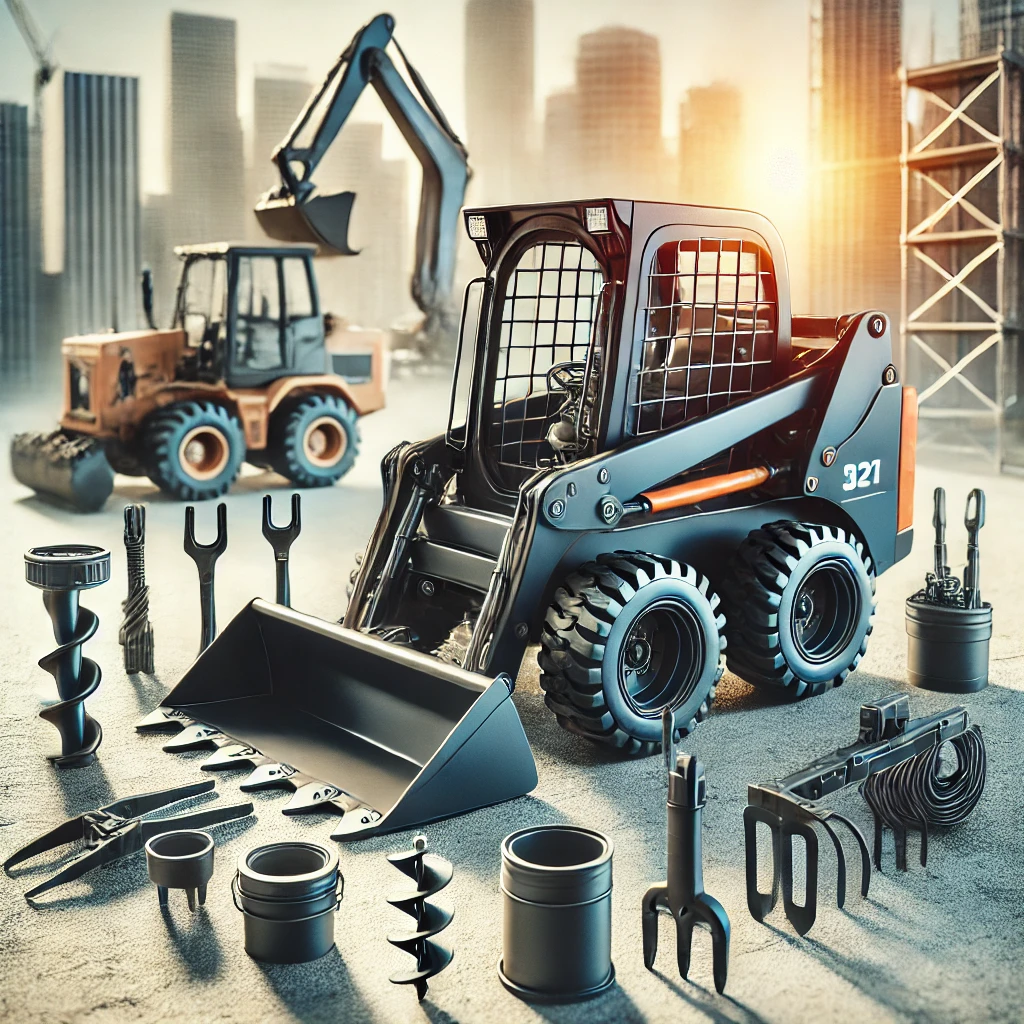
Buckets are the most commonly used attachment for mini loaders and come in various sizes and types to suit different tasks. They are perfect for general earthmoving jobs such as digging, grading, and material transport.
- Standard Bucket: Great for basic digging, material movement, and grading tasks. A must-have for most general construction or landscaping projects.
- 4-in-1 Bucket: A multi-purpose bucket that can handle dozing, grading, digging, and material transport. It offers more versatility by allowing you to open and close the bucket for gripping or pushing tasks.
When to use buckets: For general earthmoving, landscaping, material loading, and grading. They are ideal when you need a simple, all-purpose tool.
B. Augers
Augers are perfect for drilling holes in the ground, making them essential for tasks such as fence post installation, tree planting, or foundation work. These attachments come in various diameters, depending on the size of the hole required.
- Standard Auger: Best for drilling through soft or moderately hard soils.
- Heavy-Duty Auger: Designed for tough ground conditions such as rocky or compacted soil.
When to use augers: If your project requires hole digging for posts, piers, or even tree planting, augers can save time and effort compared to manual digging methods.
C. Forks
Fork attachments transform your mini loader into a forklift, allowing you to lift and transport pallets, boxes, or heavy materials around the job site. Forks are incredibly useful for moving construction materials or large items like concrete blocks or timber.
- Standard Forks: Suitable for lifting and transporting lighter loads around the site.
- Heavy-Duty Forks: Ideal for handling bulkier and heavier materials, such as pallets of bricks or lumber.
When to use forks: For lifting and transporting heavy materials, especially in construction or warehousing environments.
D. Trenchers
Trencher attachments are used for creating narrow, deep trenches for utilities, drainage, or irrigation systems. They allow for precise trenching without the need for manual labor, making the job faster and more efficient.
- Standard Trencher: Works well in softer soils and for projects that require shallow trenches.
- Heavy-Duty Trencher: Suitable for tougher ground conditions or deeper trenches.
When to use trenchers: If your project involves installing underground utilities like water lines, electrical cables, or drainage systems, trenchers can quickly create the necessary channels.
E. Hydraulic Breakers
Hydraulic breakers, also known as rock hammers, are used for breaking up tough materials like concrete or asphalt. This attachment is ideal for demolition projects, roadworks, or breaking through solid surfaces.
- Standard Breaker: Good for light demolition or breaking up smaller concrete areas.
- Heavy-Duty Breaker: Designed for more challenging demolition tasks, such as breaking large slabs of concrete or thick asphalt.
When to use hydraulic breakers: For any project involving the demolition or removal of concrete, rock, or asphalt surfaces.
2. How to Choose the Right Attachment for Your Project
Now that you know the various types of attachments available for mini loaders, let’s discuss how to choose the right one for your specific job.
A. Assess the Task at Hand
The first step in choosing the right attachment is to assess the scope of the task you need to complete. For example, if you’re moving earth or debris, a bucket attachment is likely your best option. However, if the project involves digging holes for fence posts or footings, an auger would be more appropriate.
- Material Movement: Use buckets for general earthmoving and grading.
- Hole Digging: Use augers for precise drilling.
- Material Lifting: Use forks for lifting heavy objects around the site.
- Trenching: Use trenchers to create narrow channels for utilities.
- Demolition: Use hydraulic breakers for breaking up solid materials like concrete.
B. Consider the Site Conditions
The ground conditions on your site play a major role in determining the right attachment. For example, rocky or compacted soil will require a heavy-duty auger, while soft, loose soil may only need a standard auger.
Additionally, if you’re working on rough terrain, a 4-in-1 bucket or a trencher with high torque capabilities may provide better results compared to their standard counterparts.
C. Match the Attachment to the Loader’s Capacity
Each mini loader has a maximum operating capacity, and exceeding this can lead to reduced performance or even damage to the machine. Be sure to choose an attachment that’s within your mini loader’s capacity to avoid overloading the equipment.
For example, a mini loader with a lower operating capacity may not be able to handle a heavy-duty hydraulic breaker, so be sure to check the weight and power requirements before making your selection.
D. Opt for Versatility
If you’re working on a project with multiple tasks, a versatile attachment like the 4-in-1 bucket may be the best choice. It can handle a range of activities, from digging and loading to grading and dozing, allowing you to get more done without needing to switch attachments frequently.
Versatility is particularly useful for smaller projects or when you want to minimize the need for multiple machines.
E. Factor in Time and Efficiency
Choosing the right attachment can dramatically affect how quickly and efficiently a task is completed. For instance, using an auger for hole digging can save hours of manual labor, while a trencher can speed up the process of laying utility lines. Consider the time savings and efficiency gains that the right attachment can provide.
3. Why Hiring Attachments is the Best Option
Buying attachments for your mini loader can be costly, especially if you only need them for a specific project or short-term use. This is where hiring attachments becomes a smart and cost-effective option.
At Momentum Equipment Hire, we offer a wide range of attachments to fit your specific needs, allowing you to access high-quality tools without the expense of purchasing. Whether you need a bucket for earthmoving or a trencher for utility installation, hiring gives you the flexibility to choose the right attachment for the job.
A. Cost Savings
Hiring attachments eliminates the need for a significant upfront investment. You only pay for what you need, for the duration you need it, making it a budget-friendly option for both small and large projects.
B. Access to Multiple Attachments
When you hire, you can access a wide variety of attachments without the hassle of long-term storage or maintenance. This means you can switch between attachments based on the task at hand, maximizing productivity on-site.
Conclusion
Choosing the right attachment for your mini loader is crucial to getting the job done efficiently and effectively. Whether you’re digging, trenching, lifting, or breaking, selecting the right tool for the job can save time, improve performance, and reduce costs. By hiring attachments from Momentum Equipment Hire, you gain access to the tools you need, when you need them, without the burden of ownership.
Momentum Equipment Hire
Maximise the power of your hire with the right attachments. At Momentum Equipment Hire, we offer a wide range of equipment and attachments to suit any job. Hire today and get the tools you need!